Violation_Warning-Denial_Rights_under_Color_Law.pdf
The Fourteenth Amendment to the United States Constitution-
Section 1. All persons born or naturalized in the United States, and subject to the jurisdiction thereof, are citizens of the United States and of the State wherein they reside. No State shall make or enforce any law which shall abridge the privileges or immunities of citizens of the United States; nor shall any State deprive any person of life, liberty, or property, without due process of law; nor deny to any person within its jurisdiction the equal protection of the laws.
42 U.S.C. § 671(a)(15) Reasonable Efforts
42 U.S.C. § 671(a)(19) Relative Placement
Title 18, U.S.C., Section 241
Conspiracy Against Rights
Laws: Cases and Codes : U.S. Code : Title 18 : Section 241
This statute makes it unlawful for two or more persons to conspire to injure, oppress, threaten, or intimidate any person of any state, territory or district in the free exercise or enjoyment of any right or privilege secured to him/her by the Constitution or the laws of the United States, (or because of his/her having exercised the same).
It further makes it unlawful for two or more persons to go in disguise on the highway or on the premises of another with the intent to prevent or hinder his/her free exercise or enjoyment of any rights so secured.
Punishment varies from a fine or imprisonment of up to ten years, or both; and if death results, or if such acts include kidnapping or an attempt to kidnap, aggravated sexual abuse or an attempt to commit aggravated sexual abuse, or an attempt to kill, shall be fined under this title or imprisoned for any term of years, or for life, or may be sentenced to death.
Title 18, U.S.C., Section 242
Deprivation of Rights Under Color of Law
Laws: Cases and Codes : U.S. Code : Title 18 : Section 242
This statute makes it a crime for any person acting under color of law, statute, ordinance, regulation, or custom to willfully deprive or cause to be deprived from any person those rights, privileges, or immunities secured or protected by the Constitution and laws of the U.S.
This law further prohibits a person acting under color of law, statute, ordinance, regulation or custom to willfully subject or cause to be subjected any person to different punishments, pains, or penalties, than those prescribed for punishment of citizens on account of such person being an alien or by reason of his/her color or race.
Acts under "color of any law" include acts not only done by federal, state, or local officials within the bounds or limits of their lawful authority, but also acts done without and beyond the bounds of their lawful authority; provided that, in order for unlawful acts of any official to be done under "color of any law," the unlawful acts must be done while such official is purporting or pretending to act in the performance of his/her official duties. This definition includes, in addition to law enforcement officials, individuals such as Mayors, Council persons, Judges, Nursing Home Proprietors, Security Guards, etc., persons who are bound by laws, statutes ordinances, or customs.
Punishment varies from a fine or imprisonment of up to one year, or both, and if bodily injury results or if such acts include the use, attempted use, or threatened use of a dangerous weapon, explosives, or fire shall be fined or imprisoned up to ten years or both, and if death results, or if such acts include kidnapping or an attempt to kidnap, aggravated sexual abuse or an attempt to commit aggravated sexual abuse, or an attempt to kill, shall be fined under this title, or imprisoned for any term of years or for life, or both, or may be sentenced to death.
Title 18, U.S.C., Section 245
Federally Protected Activities
Laws: Cases and Codes : U.S. Code : Title 18 : Section 245
1) This statute prohibits willful injury, intimidation, or interference, or attempt to do so, by force or threat of force of any person or class of persons because of their activity as:
a) A voter, or person qualifying to vote...;
b) a participant in any benefit, service, privilege, program, facility, or activity provided or administered by the United States;
c) an applicant for federal employment or an employee by the federal government;
d) a juror or prospective juror in federal court; and
e) a participant in any program or activity receiving Federal financial assistance.
2) Prohibits willful injury, intimidation, or interference or attempt to do so, by force or threat of force of any person because of race, color, religion, or national origin and because of his/her activity as:
a) A student or applicant for admission to any public school or public College;
b) a participant in any benefit, service, privilege, program, facility, or activity provided or administered by a state or local government;
c) an applicant for private or state employment, private or state employee; a member or applicant for membership in any labor organization or hiring hall; or an applicant for employment through any employment agency, labor organization or hiring hall;
d) a juror or prospective juror in state court;
e) a traveler or user of any facility of interstate commerce or common carrier; or
f) a patron of any public accommodation, including hotels, motels, restaurants, lunchrooms, bars, gas stations, theaters...or any other establishment which serves the public and which is principally engaged in selling food or beverages for consumption on the premises.
3) Prohibits interference by force or threat of force against any person because he/she is or has been, or in order to intimidate such person or any other person or class of persons from participating or affording others the opportunity or protection to so participate, or lawfully aiding or encouraging other persons to participate in any of the benefits or activities listed in items (1) and (2), above without discrimination as to race, color, religion, or national origin.
Punishment varies from a fine or imprisonment of up to one year, or both, and if bodily injury results or if such acts include the use, attempted use, or threatened use of a dangerous weapon, explosives, or fire shall be fined or imprisoned up to ten years or both, and if death results or if such acts include kidnapping or an attempt to kidnap, aggravated sexual abuse or an attempt to commit aggravated sexual abuse, or an attempt to kill, shall be subject to imprisonment for any term of years or for life or may be sentenced to death.
Title 18, U.S.C., Section 1001
Fraud and False Statements
United States Code
TITLE 18 - CRIMES AND CRIMINAL PROCEDURE
PART I - CRIMES
CHAPTER 47 - FRAUD AND FALSE STATEMENTS
U.S. Code as of: 01/02/01
Section 1001. Statements or entries generally
(a) Except as otherwise provided in this section, whoever, in any matter within the jurisdiction of the executive, legislative, or judicial branch of the Government of the United States, knowingly and willfully -
(1) falsifies, conceals, or covers up by any trick, scheme, or device a material fact;
(2) makes any materially false, fictitious, or fraudulent statement or representation; or
(3) makes or uses any false writing or document knowing the same to contain any materially false, fictitious, or fraudulent statement or entry; shall be fined under this title or imprisoned not more than 5 years, or both.
18 USC Sec. 1203
TITLE 18 - CRIMES AND CRIMINAL PROCEDURE
PART I - CRIMES
CHAPTER 55 - KIDNAPPING
Laws: Cases and Codes : U.S. Code : Title 18 : Section 1203
STATUTE
(a) Except as provided in subsection (b) of this section, whoever, whether inside or outside the United States, seizes or detains and threatens to kill, to injure, or to continue to detain another person in order to compel a third person or a governmental organization to do or abstain from doing any act as an explicit or implicit condition for the release of the person detained, or attempts or conspires to do so, shall be punished by imprisonment for any term of years or for life and, if the death of any person results, shall be punished by death or life imprisonment.
United States Code TITLE 18 - CRIMES AND CRIMINAL PROCEDURE
PART I - CRIMES CHAPTER 109 - SEARCHES AND SEIZURES
U.S. Code as of: 01/02/01
Section 2234. Authority exceeded in executing warrant
Whoever, in executing a search warrant, willfully exceeds his authority or exercises it with unnecessary severity, shall be fined under this title or imprisoned not more than one year. U.S. Code as of: 01/02/01
Section 2235. Search warrant procured maliciously Whoever maliciously and without probable cause procures a search warrant to be issued and executed, shall be fined under this title or imprisoned not more than one year.
Section 2236. Searches without warrant
Whoever, being an officer, agent, or employee of the United States or any department or agency thereof, engaged in the enforcement of any law of the United States, searches any private dwelling used and occupied as such dwelling without a warrant directing such search, or maliciously and without reasonable cause searches any other building or property without a search warrant, shall be fined for a first offense not more than $1,000; and, for a subsequent offense, shall be fined under this title or imprisoned not more than one year, or both.
This section shall not apply to any person -
(a) serving a warrant of arrest; or
(b) arresting or attempting to arrest a person committing or
attempting to commit an offense in his presence, or who has
committed or is suspected on reasonable grounds of having
committed a felony; or
(c) making a search at the request or invitation or with the
consent of the occupant of the premises.
More on Section 2236
Title 42 USC Section 1983
Laws: Cases and Codes : U.S. Code : Title 42 : Section 1983
Sec. 1983. - Civil action for deprivation of rights
Every person who, under color of any statute, ordinance, regulation, custom, or usage, of any State or Territory or the District of Columbia, subjects, or causes to be subjected, any citizen of the United States or other person within the jurisdiction thereof to the deprivation of any rights, privileges, or immunities secured by the Constitution and laws, shall be liable to the party injured in an action at law, suit in equity, or other proper proceeding for redress, except that in any action brought against a judicial officer for an act or omission taken in such officer's judicial capacity, injunctive relief shall not be granted unless a declaratory decree was violated or declaratory relief was unavailable. For the purposes of this section, any Act of Congress applicable exclusively to the District of Columbia shall be considered to be a statute of the District of Columbia
Title 42 USC Section 1983 Information
Title 42, U.S.C., Section 14141
Pattern and Practice
Laws: Cases and Codes : U.S. Code : Title 42 : Section 14141
This civil statute was a provision within the Crime Control Act of 1994 and makes it unlawful for any governmental authority, or agent thereof, or any person acting on behalf of a governmental authority, to engage in a pattern or practice of conduct by law enforcement officers or by officials or employees of any governmental agency with responsibility for the administration of juvenile justice or the incarceration of juveniles that deprives persons of rights, privileges, or immunities secured or protected by the Constitution or laws of the United States.
Whenever the Attorney General has reasonable cause to believe that a violation has occurred, the Attorney General, for or in the name of the United States, may in a civil action obtain appropriate equitable and declaratory relief to eliminate the pattern or practice.
Types of misconduct covered include, among other things:
1. Excessive Force
2. Discriminatory Harassment
3. False Arrest
4. Coercive Sexual Conduct
5. Unlawful Stops, Searches, or Arrests
FRAUD
United States Code
TITLE 18 - CRIMES AND CRIMINAL PROCEDURE
PART I - CRIMES
CHAPTER 47 - FRAUD AND FALSE STATEMENTS
Section 1001. Statements or entries generally
(a) Except as otherwise provided in this section, whoever, in any matter within the jurisdiction of the executive, legislative, or judicial branch of the Government of the United States, knowingly and willfully -
(1) falsifies, conceals, or covers up by any trick, scheme, or device a material fact;
(2) makes any materially false, fictitious, or fraudulent statement or representation; or
(3) makes or uses any false writing or document knowing the same to contain any materially false, fictitious, or fraudulent statement or entry; shall be fined under this title or imprisoned not more than 5 years, or both.
(b) Subsection (a) does not apply to a party to a judicial proceeding, or that party's counsel, for statements, representations, writings or documents submitted by such party or counsel to a judge or magistrate in that proceeding. (OK for system to lie?)
(c) With respect to any matter within the jurisdiction of the legislative branch, subsection (a) shall apply only to -
(1) administrative matters, including a claim for payment, a matter related to the procurement of property or services, personnel or employment practices, or support services, or a document required by law, rule, or regulation to be submitted to the Congress or any office or officer within the legislative branch; or
(2) any investigation or review, conducted pursuant to the authority of any committee, subcommittee, commission or office of the Congress, consistent with applicable rules of the House or Senate.
http://familyrights.us / bin / CPS_violates_these_every_case.htm
Isabella Brooke Knightly and Austin Gamez-Knightly

In Memory of my Loving Husband, William F. Knightly Jr. Murdered by ILLEGAL Palliative Care at a Nashua, NH Hospital
Saturday, June 12, 2010


Make every effort to keep families together
Make every effort to keep families together
State should separate parents and children only as last resort
JUNE 11, 2010
More than 180 Indiana children per week are removed from their homes by the state. For an outsider to say which of those moves are justified and which are not would be a reach of absurd lengths.
Yet the broad picture painted by the high and rising figure does call into question the state's claim that it's doing all it can to keep troubled families intact. Moreover, it casts doubt on the progress of reform in child protection, a paramount priority of Gov. Mitch Daniels since his first election in 2004.
Interestingly, a key element of reform, additional caseworkers, is cited by the Department of Child Services as a reason behind the unwelcome new data. Commenting as part of a report Sunday by The Indianapolis Star's Tim Evans, a DCS spokesperson attributed the phenomenon to more reporting of abuse and neglect, more staff to investigate those problems and growing financial stress on households.
Yet other states, with equal or superior resources and arguably worse economies, do better than Indiana at minimizing the last resort: separating children from their parents and placing them in foster settings. Indeed, some critics argue that poverty is often misconstrued as neglect.
While there's no dispute that removal often is necessary, and that foster homes are generally caring environments, the consensus of experts is that kids are best served by helping their original families. The most recent federal data reflect as much, showing a 7 percent drop in removals nationally. The reverse is true in Indiana, whose 9,375 removals in fiscal 2008 represented a 22 percent jump from 2007. And the rise appears to continue.
Besides removals, the period since 2004 has been marked by below-par performance in two other categories: placement of removed children with relatives and the rate of repeat maltreatment of children after state intervention. Removal costs taxpayers, too: more than $70 million a year.
Critics, including a state-sanctioned couple interviewed by Evans who got the help they needed from non-DCS sources, contend that Indiana does too little to assist families and does much to punish them. The state insists otherwise and says it is intensifying its communications, recruitment of community partners and relative-placement strategies along the lines of family preservation.
"If any child cannot safely remain in his or her home, it is our legal duty to place that child in a safe, stable environment," DCS spokeswoman Ann Houseworth said.
No argument there. But the numbers suggest more can be done to avoid hitting the point of "cannot."
-- The Indianapolis Star
http://www.pal-item.com/article/20100611/NEWS03/6110321
State should separate parents and children only as last resort
JUNE 11, 2010
More than 180 Indiana children per week are removed from their homes by the state. For an outsider to say which of those moves are justified and which are not would be a reach of absurd lengths.
Yet the broad picture painted by the high and rising figure does call into question the state's claim that it's doing all it can to keep troubled families intact. Moreover, it casts doubt on the progress of reform in child protection, a paramount priority of Gov. Mitch Daniels since his first election in 2004.
Interestingly, a key element of reform, additional caseworkers, is cited by the Department of Child Services as a reason behind the unwelcome new data. Commenting as part of a report Sunday by The Indianapolis Star's Tim Evans, a DCS spokesperson attributed the phenomenon to more reporting of abuse and neglect, more staff to investigate those problems and growing financial stress on households.
Yet other states, with equal or superior resources and arguably worse economies, do better than Indiana at minimizing the last resort: separating children from their parents and placing them in foster settings. Indeed, some critics argue that poverty is often misconstrued as neglect.
While there's no dispute that removal often is necessary, and that foster homes are generally caring environments, the consensus of experts is that kids are best served by helping their original families. The most recent federal data reflect as much, showing a 7 percent drop in removals nationally. The reverse is true in Indiana, whose 9,375 removals in fiscal 2008 represented a 22 percent jump from 2007. And the rise appears to continue.
Besides removals, the period since 2004 has been marked by below-par performance in two other categories: placement of removed children with relatives and the rate of repeat maltreatment of children after state intervention. Removal costs taxpayers, too: more than $70 million a year.
Critics, including a state-sanctioned couple interviewed by Evans who got the help they needed from non-DCS sources, contend that Indiana does too little to assist families and does much to punish them. The state insists otherwise and says it is intensifying its communications, recruitment of community partners and relative-placement strategies along the lines of family preservation.
"If any child cannot safely remain in his or her home, it is our legal duty to place that child in a safe, stable environment," DCS spokeswoman Ann Houseworth said.
No argument there. But the numbers suggest more can be done to avoid hitting the point of "cannot."
-- The Indianapolis Star
http://www.pal-item.com/article/20100611/NEWS03/6110321
DSHS audit finds new problems
DSHS audit finds new problems
Foster Care: Agency says it requires checks
THE NEWS TRIBUNE
Published: 06/10/1012:05 am
State officials say they aren’t placing children with foster parents who haven’t cleared background checks, defending their agency after an audit found problems with handling of foster care.
The state auditor’s office reported this week that the Department of Social and Health Services didn’t comply with criminal background check requirements in 2009, failing to fix problems that were also found in audits from 2003 to 2008.
Auditors found 24 foster care providers they said were paid without clearing background checks, including seven with a criminal record or a history of being investigated for potential child abuse or neglect, and 17 others who were never checked at all.
But Dan Ashby, senior finance manager for the Children’s Administration agency within DSHS, said anyone who had custody of a child got a background check, except for the children’s parents, who aren’t required to be checked.
Those parents account for some of the audit’s findings, he said, while other missing information is because of a new state database that wasn’t always accurate.
Ashby said only one case involved a true criminal history, a decades-old conviction from the provider’s teenage years.
Still, the questions about background checks have persisted for years. But Children’s Administration officials said updates in January to the state’s case management system would fix them. No payments will be allowed to providers now unless a background check is on file, they said.
Jordan Schrader, staff writer
Read more: http://www.thenewstribune.com/2010/06/10/1220373/dshs-audit-finds-new-problems.html#ixzz0qftiU6qG
Foster Care: Agency says it requires checks
THE NEWS TRIBUNE
Published: 06/10/1012:05 am
State officials say they aren’t placing children with foster parents who haven’t cleared background checks, defending their agency after an audit found problems with handling of foster care.
The state auditor’s office reported this week that the Department of Social and Health Services didn’t comply with criminal background check requirements in 2009, failing to fix problems that were also found in audits from 2003 to 2008.
Auditors found 24 foster care providers they said were paid without clearing background checks, including seven with a criminal record or a history of being investigated for potential child abuse or neglect, and 17 others who were never checked at all.
But Dan Ashby, senior finance manager for the Children’s Administration agency within DSHS, said anyone who had custody of a child got a background check, except for the children’s parents, who aren’t required to be checked.
Those parents account for some of the audit’s findings, he said, while other missing information is because of a new state database that wasn’t always accurate.
Ashby said only one case involved a true criminal history, a decades-old conviction from the provider’s teenage years.
Still, the questions about background checks have persisted for years. But Children’s Administration officials said updates in January to the state’s case management system would fix them. No payments will be allowed to providers now unless a background check is on file, they said.
Jordan Schrader, staff writer
Read more: http://www.thenewstribune.com/2010/06/10/1220373/dshs-audit-finds-new-problems.html#ixzz0qftiU6qG
No Such Thing as ADHD!
What is the definition of ADD/ADHD according to the DSM_IV?
ArticlesRoad.com
May 29, 2010
The term “ADHD” is simply a label used to categorise a list of psychosocial traits that Psychiatry considers to be improper or abnormal in society. Psychiatry defines these traits as a “mental illness”, and promotes it as a “disease” that requires “treatment”.
It is not a “disease”, despite claims or implications made by certain psychiatric or pharmaceutical organisations. There is NO credible scientific evidence that shows the existence of what constitutes “ADHD” as a biological/neurological disorder, brain abnormality or “chemical imbalance”.
“For a disease to exist there must be a tangible, objective physical abnormality that can be determined by a test such as, but not limited to, blood or urine test, X-Ray, brain scan or biopsy. All reputable doctors would agree: No physical abnormality, no disease. In psychiatry, no test or brain scan exists to prove that a ‘mental disorder’ is a physical disease. Disingenuous comparisons between physical and mental illness and medicine are simply part of psychiatry’s orchestrated but fraudulent public relations and marketing campaign.” Fred Baughman, MD., Neurologist & Pediatric Neurologist.
“Chemical imbalance” it’s a shorthand term really, it’s probably drug industry derived “We don’t have tests because to do it, you’d probably have to take a chunk of brain out of someone – not a good idea.” Dr. Mark Graff, Chair of the Committee of Public Affairs for the American Psychiatric Association. July, 2005.
Such behavioural characteristics that Psychiatry created this unscientific “disease” from are, and always have been, generally considered “normal”. Now, it seems, inattention or “hyperactivity” (Hyperactivity means ‘excessively active’* — what is excessive? On whose authority?? It’s ridiculous!!) is abnormal, a “mental illness”.
Read entire article: http://articlesroad.com/adhd/what-is-the-defination-of-addadhd-according-to-the-dsm_iv.html
http://www.cchrint.org/2010/05/31/adhd-is-a-total-100-fraud-the-millions-of-schoolchildren-around-the-world-being-drugged-have-no-disease-neurologist/
ArticlesRoad.com
May 29, 2010
The term “ADHD” is simply a label used to categorise a list of psychosocial traits that Psychiatry considers to be improper or abnormal in society. Psychiatry defines these traits as a “mental illness”, and promotes it as a “disease” that requires “treatment”.
It is not a “disease”, despite claims or implications made by certain psychiatric or pharmaceutical organisations. There is NO credible scientific evidence that shows the existence of what constitutes “ADHD” as a biological/neurological disorder, brain abnormality or “chemical imbalance”.
“For a disease to exist there must be a tangible, objective physical abnormality that can be determined by a test such as, but not limited to, blood or urine test, X-Ray, brain scan or biopsy. All reputable doctors would agree: No physical abnormality, no disease. In psychiatry, no test or brain scan exists to prove that a ‘mental disorder’ is a physical disease. Disingenuous comparisons between physical and mental illness and medicine are simply part of psychiatry’s orchestrated but fraudulent public relations and marketing campaign.” Fred Baughman, MD., Neurologist & Pediatric Neurologist.
“Chemical imbalance” it’s a shorthand term really, it’s probably drug industry derived “We don’t have tests because to do it, you’d probably have to take a chunk of brain out of someone – not a good idea.” Dr. Mark Graff, Chair of the Committee of Public Affairs for the American Psychiatric Association. July, 2005.
Such behavioural characteristics that Psychiatry created this unscientific “disease” from are, and always have been, generally considered “normal”. Now, it seems, inattention or “hyperactivity” (Hyperactivity means ‘excessively active’* — what is excessive? On whose authority?? It’s ridiculous!!) is abnormal, a “mental illness”.
Read entire article: http://articlesroad.com/adhd/what-is-the-defination-of-addadhd-according-to-the-dsm_iv.html
http://www.cchrint.org/2010/05/31/adhd-is-a-total-100-fraud-the-millions-of-schoolchildren-around-the-world-being-drugged-have-no-disease-neurologist/
Police looking for missing foster child(Why does any child runaway from foster care?)
Police looking for missing foster child
by Continuous News Desk
Posted: 06.11.2010 at 6:45 PM
|more
Read more: Local, Florence County, Florence Police, Possible Runaway Foster Child
Deputies say 10-year-old Jermaine Davis of Pamplico left his home Monday afternoon.
Florence County deputies are looking for a possible runaway foster child.
Deputies say 10-year-old Jermaine Davis of Pamplico left his home Monday afternoon. He was riding a blue bicycle and wearing a brown T-shirt, brown and blue plaid shorts and flip-flops.
Deputies say he may be trying to find his biological mother, Josephine Burgess, in Lake City.
If you know where Davis or Burgess may be, you're asked to call the Florence County Sheriff's Office at 843-665-2121.
http://www.carolinalive.com/news/story.aspx?id=469455
by Continuous News Desk
Posted: 06.11.2010 at 6:45 PM
|more
Read more: Local, Florence County, Florence Police, Possible Runaway Foster Child
Deputies say 10-year-old Jermaine Davis of Pamplico left his home Monday afternoon.
Florence County deputies are looking for a possible runaway foster child.
Deputies say 10-year-old Jermaine Davis of Pamplico left his home Monday afternoon. He was riding a blue bicycle and wearing a brown T-shirt, brown and blue plaid shorts and flip-flops.
Deputies say he may be trying to find his biological mother, Josephine Burgess, in Lake City.
If you know where Davis or Burgess may be, you're asked to call the Florence County Sheriff's Office at 843-665-2121.
http://www.carolinalive.com/news/story.aspx?id=469455
Friday, June 11, 2010


Austin Knightly-Before DCYF and After
Austin, Happy,Before DCYF
Austin and his sister-now separated

Austin and Aunt Candy-His Protector

Austin and Mommy's last Christmas together

Austin's last outing to Canobie Lake Park with Grammie and Grampie

Austin in his pool

Austin and Grampie at Austin's 5th birthday party

Austin on an outing to Canobie Lake Park

AFTER DCYF!
Austin playing alone at the Childrens Home

Doped up at the Childrens Home
+(1)Austin+with+frowns.jpg)
Skin and bones at the Childrens Home

Austin and his sister-now separated

Austin and Aunt Candy-His Protector

Austin and Mommy's last Christmas together

Austin's last outing to Canobie Lake Park with Grammie and Grampie

Austin in his pool

Austin and Grampie at Austin's 5th birthday party
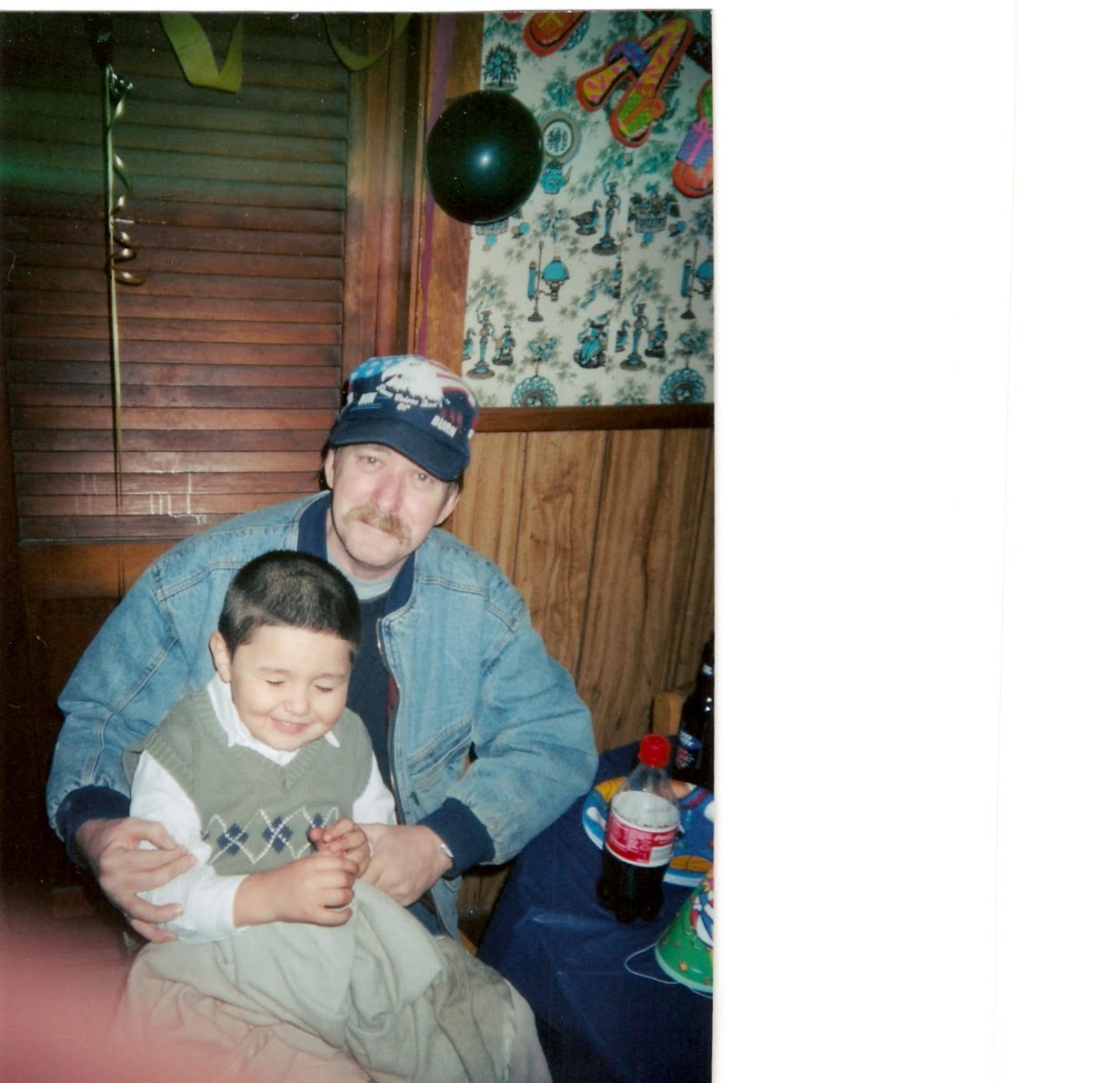
Austin on an outing to Canobie Lake Park

AFTER DCYF!
Austin playing alone at the Childrens Home
Doped up at the Childrens Home
+(1)Austin+with+frowns.jpg)
Skin and bones at the Childrens Home

Subscribe to:
Posts (Atom)